Summer days: how light, heat and long evenings affect your sleep and mood
In winter everyone asks about low mood; in summer it is rarely asked about. Yet in July and August I see people who are having a harder time than in November. They sleep badly in the heat, their days are disrupted, everyone around them seems to be enjoying themselves, and precisely because of that they feel guilty that they cannot manage it. In this article I discuss what summer does to your sleep and mood, what you can practically do about it, and when it is wise to seek help.
Summer is not light for everyone
There is an assumption built into the way we speak: winter is hard, summer is light. For many people that is true. But not for everyone, and that makes summer lonelier for some. If the whole world seems to be enjoying itself and you feel empty, shame is quickly added on top. 'What have I got to complain about, the sun is shining.'
That shame is one of the reasons summer complaints are less visible. People come forward later, or not at all. While there are very understandable reasons why this season can weigh heavily: disturbed sleep, heat, a lost daily rhythm, financial pressure around holidays, and sometimes simply that the structure of work or school has fallen away.
If you recognise this: you do not need a good excuse to feel unwell. The season does not determine whether your complaints are allowed to exist.
Heat and sleep: your body has to cool down
To fall asleep, your body temperature has to drop a little. That is not incidental but one of the signals your sleep system runs on. In a warm bedroom that drop is difficult, and you notice it: you fall asleep later, you wake more often, and your deep sleep gets shorter.
On top of that, warm nights often coincide with other disruptors. You are quicker to have a beer or a glass of wine on a terrace. Alcohol may help you fall asleep, but it breaks up your sleep in the second half of the night, precisely the phase in which you recover most. Eating late and exercising late in the evening cool can also make falling asleep harder.
The complaint people then report is rarely 'it is hot'. It is: I am tired, I am short-tempered, I cannot cope with anything. While the cause lies to a large extent in the bedroom.
Light, rhythm and waking too early
Your biological clock is set mainly by light. In summer it stays light late in the evening and is already bright early in the morning. The result is that you become sleepy later and still wake early: your sleep window is squeezed from both sides.
For most people that is inconvenient but temporary. For those already vulnerable, it can be destabilising. A stable day and night rhythm is one of the strongest protective factors in mood complaints; in bipolar vulnerability a disrupted sleep rhythm is even a known risk factor for relapse. That is no reason for panic, but it is a reason to take rhythm seriously in summer.
The good news is that light is also your most important lever. Morning light moves your clock forward and helps you become sleepy on time in the evening; bright light late in the evening does the opposite.
Sleep hygiene in summer: what practically works
Cool the room, not just yourself. Keep curtains and windows on the sunny side closed during the day and open what you can at night and early in the morning. A fan that moves air often helps more than it cools, and that is enough. Choose thin cotton sheets over synthetic ones; a lukewarm shower before bed works better than a cold one, because your skin then gives off heat.
Hold on to your rhythm, even when the evenings are long. Get up at the same time as much as possible, including at weekends and including after a bad night; your wake-up time is the anchor of your whole rhythm. Seek out daylight in the first hour after getting up, even if only for ten minutes. Really darken your bedroom, with blackout curtains or, failing that, a sleep mask.
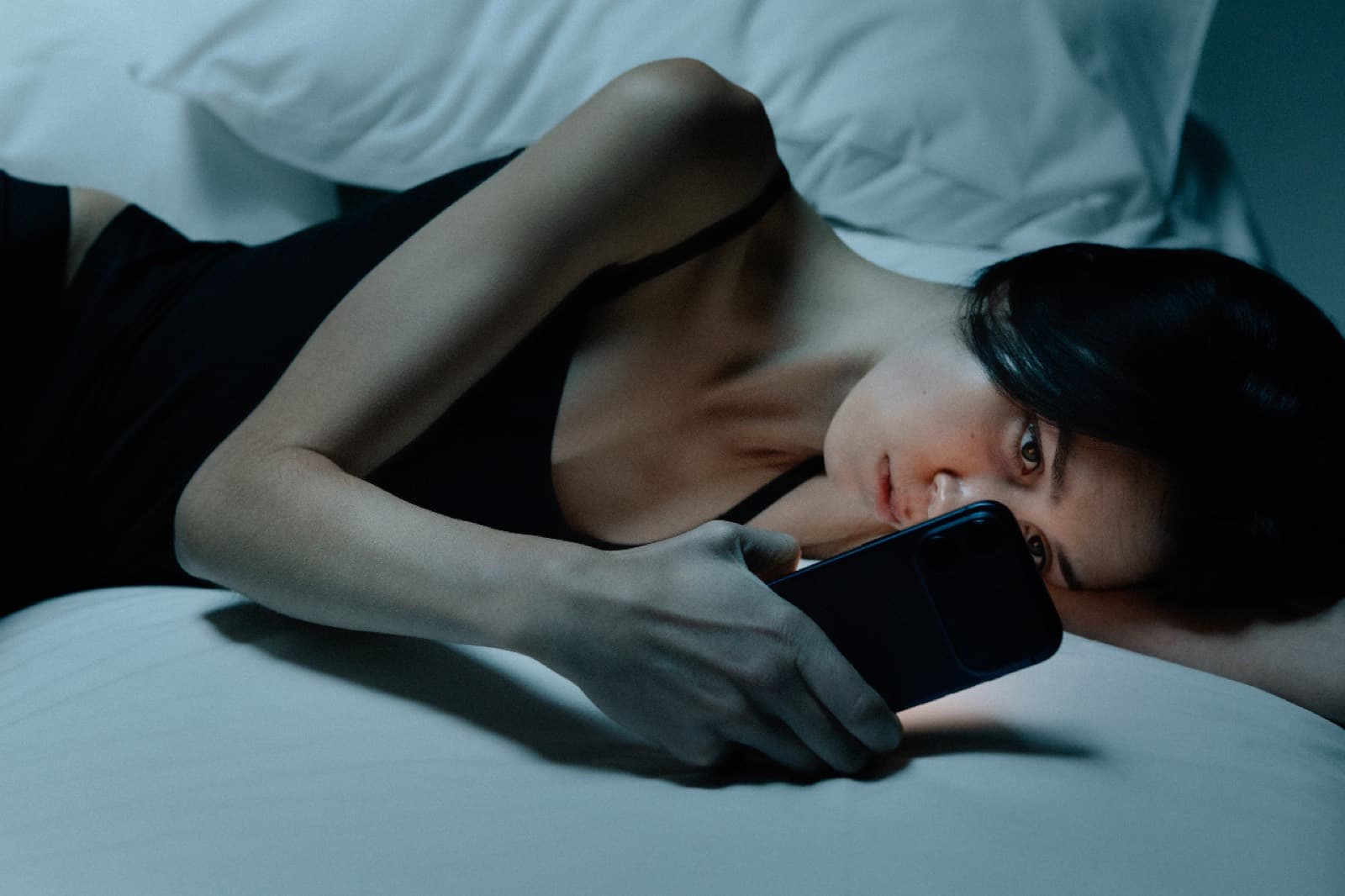
And be careful with the summer pitfalls: alcohol as a nightcap, a long nap on a warm afternoon, and reaching for your phone while lying awake at night. If you have been wide awake for half an hour, getting up and doing something boring in another room is more effective than continuing to toss and turn.
Summer depression exists too
Most people know about winter depression: low mood that comes with the dark months and lifts in spring. Less well known is that a summer variant also exists, a seasonal mood complaint with a pattern in summer. It is rarer, but precisely because of that it often goes unrecognised, including by the person themselves.
The picture also differs from the winter variant. Where people in winter often sleep more and eat more, in summer you see rather poor sleep, reduced appetite, weight loss, restlessness and irritability. The fact that it does not look like 'the classic depression' means people wave their complaints away as tiredness from the heat.
If you notice that you sink into the same pit several summers in a row, then that pattern is in itself a reason to talk about it with your GP or with us. A pattern is in fact good news: it is predictable, and that means there is something you can prepare for.
When summer is also a social season
For many of our clients, summer is not primarily a period of rest but of obligations. It is the season of visiting family in the country of origin, of weddings, of house guests, of everyone wanting something from you at once. That can be warm and nourishing, and exhausting at the same time.
There is often something else at play: the journey 'home' is rarely just a holiday. There are expectations about presents and money, about how you are doing, about how long you are staying and with whom. Anyone living in two worlds often does double work in summer, and comes back without ever having truly rested.
If you recognise this, it is worth thinking in advance about what you need in order to recover as well. A day alone. A return journey with a spare day afterwards. A boundary you announce beforehand instead of having to defend on the spot. That is not selfishness; it is the condition for being able to be there for others.
When is it more than the summer?
A few bad nights in a heatwave are normal and pass by themselves. If, however, you keep sleeping badly for longer than two to three weeks despite having tried the practical things, then it is wise to do something about it.
Signals outside sleep also count: persistent low mood or emptiness, little pleasure in things you normally enjoy, sharply reduced appetite, a lot of irritability, or thoughts that it need not go on. With that last one you do not wait: call your GP or the out-of-hours GP service, or 113 Suicide Prevention on 0800-0113.
Sleep problems are very treatable. For persistent insomnia, cognitive behavioural therapy for insomnia (CBT-I) is the first-line treatment, and more effective in the long term than sleep medication. Unsure whether your complaints fit with us? Feel free to get in touch and we will think along with you.
Sources
- Thuisarts.nl — slecht slapen
- Hersenstichting — slaap en de hersenen
- Trimbos-instituut — kennis over geestelijke gezondheid
This article is informative and does not replace personal advice from a care provider. In doubt, or do you have questions about your own situation? Feel free to contact us.
Questions or ready to apply?
We're happy to think along with you, in your language and at your pace.