Anxiety and panic attacks: an alarm without danger, and what helps
As a healthcare psychologist I treat many people with anxiety, and almost everyone asks me the same question: 'Am I going mad?' The answer is invariably no. Anxiety is one of the most human and useful systems we have, it is only sometimes set too sensitively. In this article I explain what anxiety and panic actually are, why they can get such a grip on you, and above all: what really helps against them.
Anxiety is normal, until it starts steering your life
Anxiety is not a fault in the system, it is the system. It is your built-in alarm that, in a fraction of a second, prepares you to flee or fight when in danger. Without anxiety you would step in front of a car or walk off a cliff. A little tension before an exam or a job interview is simply part of it.
It only becomes a problem when the alarm goes off too often, too violently, or without real danger, and when you start arranging your life to avoid that anxiety. No longer going to the supermarket, no longer taking the train, no longer going to parties. At that moment anxiety is no longer a protector, but a prison guard.
An honest question to yourself: does anxiety by now steer your choices, instead of the other way round? The answer helps to determine whether it is time to do something about it.
What happens in your body during a panic attack
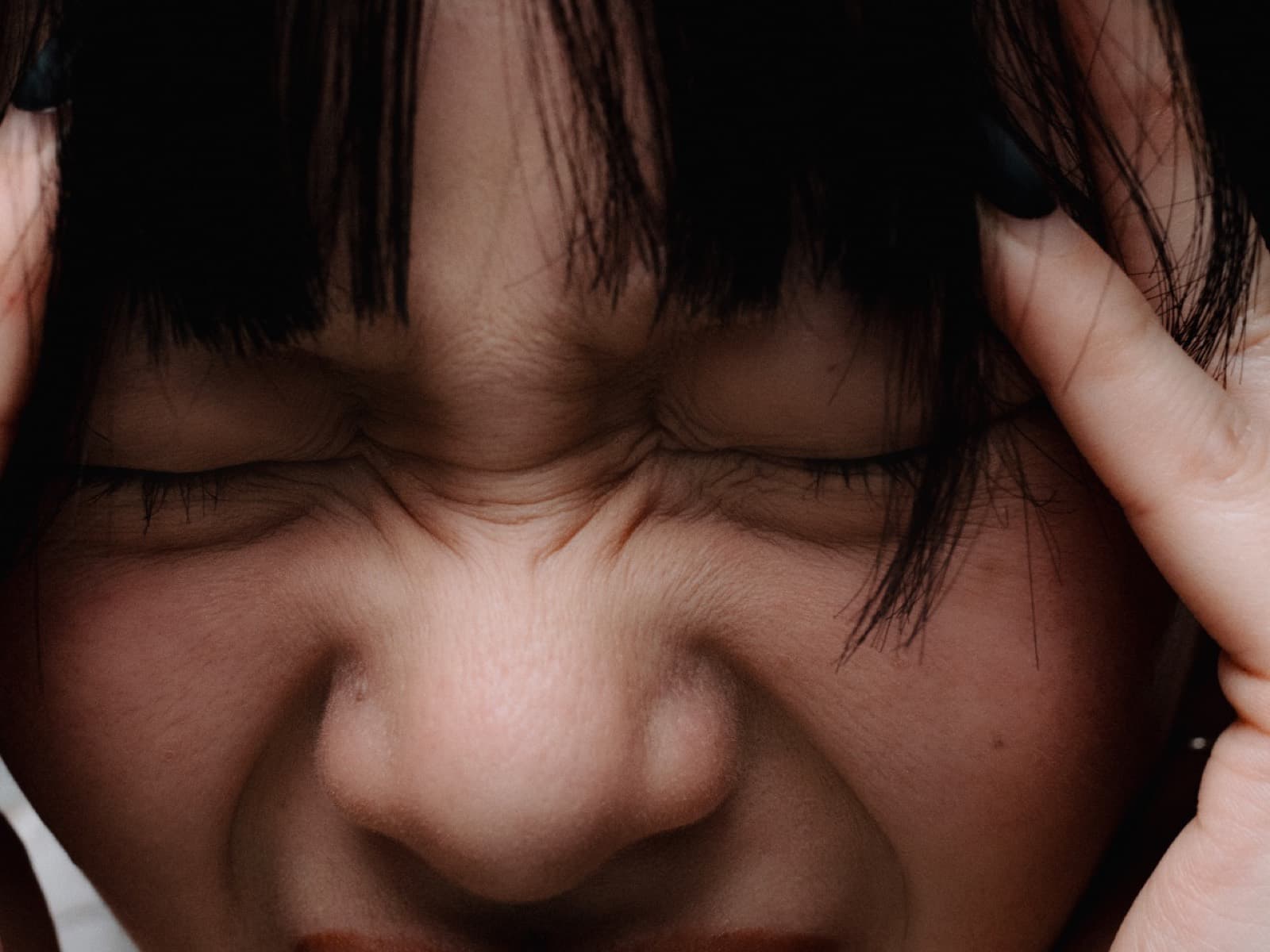
A panic attack is anxiety in the superlative, and physically completely real. Your heart pounds, you breathe fast, you tingle, you become dizzy, nauseous, you feel detached from the world. Many people think at that moment that they are having a heart attack, fainting or dying.
What really happens: your fight-flight system shifts into top gear, while there is no tiger to flee from. All that adrenaline has to go somewhere, and you feel it in your whole body. It is extremely unpleasant, but not dangerous, and an attack always dies down again by itself, usually within ten to twenty minutes.
It is precisely that fear of the fear, the fright at the physical sensations, that makes a panic attack worse and keeps it going. Understanding what is happening is therefore the first step to reducing its grip.
The vicious circle of avoidance
Avoiding feels logical: if the supermarket gave a panic attack, you no longer go there. For a moment that brings relief. But in the long term avoidance is exactly the fuel on which anxiety grows. After all, you teach your brain: 'that situation really was dangerous, good thing we stayed away.'
That is how your world becomes smaller bit by bit. The supermarket, then the busy street, then the bus, then visitors. Each avoidance confirms the anxiety and calls for the next. This pattern is no sign of weakness; it is simply how anxiety works in everyone.
The way out sounds counterintuitive: not staying away, but step by step, in a safe way, taking on the confrontation again, so that your brain learns anew that it is safe after all. That is exactly where the treatment takes hold.
What you can do during a panic attack
The most important thing first: fighting against a panic attack usually makes it more violent. Try instead to accept that the wave is there, and to remind yourself that it will pass by itself. 'This is unpleasant, but not dangerous, and it will pass.'
Calm belly breathing helps your body shift out of top gear: breathe in slowly through your nose, and out longer through your mouth. Distraction often works too: name out loud five things you see, feel your feet on the ground, or call someone. By bringing your attention to the here and now, you give the adrenaline time to subside.
It takes practice, and it does not work perfectly straight away. But each time you let an attack come and go without fleeing from it, you teach your brain something new.
Anxiety has many faces
Anxiety is a family, not a single complaint. In a panic disorder the attacks and the fear of them are central. In a social anxiety disorder it is about the fear of being judged by others. A generalised anxiety disorder is characterised by almost incessant worrying about all sorts of things. And in a specific phobia there is a strong fear of one thing, such as heights, spiders or the dentist.
They differ in form, but share the same core: an overactive alarm and a pattern of avoidance. And the good news: they are all very treatable, often with the same building blocks.
Do you recognise yourself in one of these forms? For the first step it does not matter so much which label fits exactly, that we work out together. More important is that you notice anxiety is limiting you.
What helps: proven treatment
For anxiety disorders cognitive behavioural therapy (CBT) is the first-choice treatment, as it is also stated in the Dutch guidelines. In it you learn to examine and adjust your anxious thoughts, and via exposure you take on the feared situations again step by step, so that your brain learns that it is safe. That sounds daunting, but it happens at a pace you can manage.
Many people already improve with good information (psycho-education) and CBT. Sometimes medication is added, for example if the anxiety is very intense or you cannot manage to start with therapy. Which route fits we determine together.
What I like to pass on to people: anxiety is one of the most treatable complaints in mental health care. The courage to begin is often the hardest part, after that it goes step by step in the right direction.
Persistent misunderstandings about anxiety
'I am going mad or losing control.' A common fear during panic, but panic attacks do not lead to madness or loss of control; it is an overactive alarm, not an incipient psychosis. 'A panic attack is dangerous for my heart.' It feels alarming, but a healthy heart can handle that burst of adrenaline just fine.
And perhaps the most persistent: 'I just have to get over it.' If only it were that simple. You do not overcome anxiety by ignoring it or pushing it away, but by facing it gradually, with the right guidance. That is something other than throwing yourself in at the deep end.
Have you been walking around with anxiety for a while and is it making your world smaller? Then you do not have to endure that until it passes 'by itself'. A first conversation costs nothing but a little courage, and can bring much.
Sources
- NHG-Richtlijnen — Standaard Angst
- GGZ Standaarden — Angstklachten en angststoornissen
- Thuisarts.nl — Behandeling van een paniekstoornis
This article is informative and does not replace personal advice from a care provider. In doubt, or do you have questions about your own situation? Feel free to contact us.
Questions or ready to apply?
We're happy to think along with you, in your language and at your pace.